Let’s Talk

When I first posted my Minted chal­lenge favorites last week, I had no idea that the result­ing con­ver­sa­tion would take the course it did. That post gen­er­ated the most com­ments we’ve ever had on any given entry, which made it pretty clear that peo­ple want to talk. So this seemed like the per­fect time for us to start the Let’s Talk series—something I’ve been plan­ning to start for quite awhile—to con­tinue the conversation.

Before I throw in my two cents, let me get this out of the way—I am in no way an expert on copy­right or pla­gia­rism. I have my own opin­ions, but I def­i­nitely have more ques­tions than answers, which is why I’m espe­cially curi­ous to hear what you all have to say.

These days, with most artists hav­ing mul­ti­ple online homes, it’s become eas­ier and eas­ier for those who don’t have ideas of their own to steal from oth­ers. Clearly a huge prob­lem. And it’s a topic that artists are def­i­nitely con­cerned about, as blogs like You Thought We Wouldn’t Notice have cropped up to doc­u­ment this very thing.

But at the same time, it seems to me that we’ve also become hyper­sen­si­tive to poten­tial copy­right infringe­ments. I’ve been see­ing more and more com­ments that go some­thing like, “This looks like this…” with a link to some other piece of art­work they think the posted work has been stolen from. Granted they may be right, but what if they’re not?

When it hap­pens on this blog it puts me in a strange posi­tion. I do my best to post work that is orig­i­nal. But since we are bom­barded with with thou­sands of images every day (from places like this very blog), it’s vir­tu­ally impossible—from a tim­ing stand­point as well as a purely infor­ma­tional standpoint—to trace every sin­gle piece of work’s his­tory. It also puts the artist in a posi­tion where they’re forced to defend them­selves (if they even see the accu­sa­tion) in a very pub­lic forum.

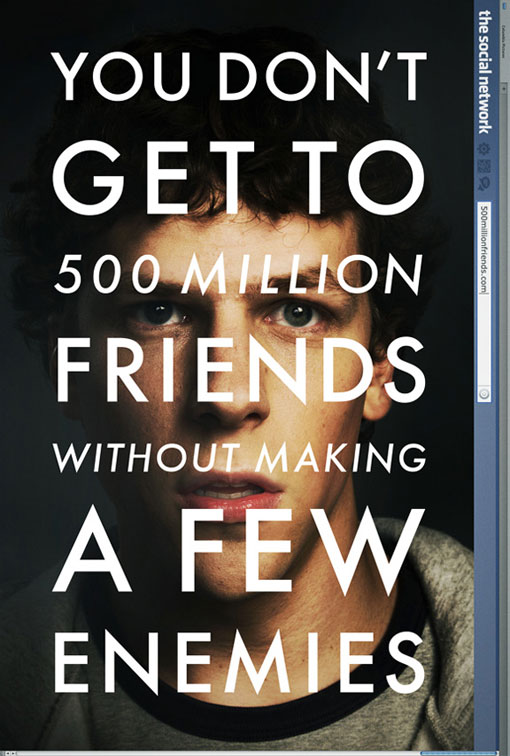
Most recently I’ve seen this in regards to The Social Network movie poster. Half of the com­ments on the var­i­ous blogs where it’s been fea­tured link to pieces of work that look some­what sim­i­lar (see below). And most of the time I sort of see their point. The exam­ples are other layouts—book cov­ers, posters, whatever—that also fea­ture a tight crop of a face under­neath white typography.

Mind you, I’m part of the camp that thinks the Social Network poster is smart, well-designed and eye-catching. Maybe white type on top of a photo isn’t the most orig­i­nal idea. But is it that impos­si­ble to think that another designer arrived at the solu­tion to layer white type over a head­shot with­out con­sciously rip­ping off another piece of work? And don’t the other ele­ments on the page—the Facebook bar etc.—add orig­i­nal­ity to the design solution?

This is just one exam­ple. But I find that the same type of ques­tions keep com­ing up.

Blatantly steal­ing some­one else’s work is always wrong. Being inspired by those you admire is not, and I think this is where the line gets blurry. When it’s not obvi­ous, how can you take a piece of work at face value and know whether the artist came to that con­clu­sion entirely on their own, whether they out­right stole another artist’s work, or whether they were sub­con­sciously influ­enced by the work after see­ing it online?

So how do we pre­vent peo­ple from steal­ing our work and the work of oth­ers with­out being so quick to assume the worst? And where do we draw the line on a piece that is inspired by ver­sus a rip-off? What do you all think?

16 Comments

  • June 29, 2010 — 8:25 am
    Lyndsay said:

    Yay for this topic, I had been pon­der­ing some­thing sim­i­lar recently and won­dered if any­one felt the same way. I whole­heart­edly agree that design­ers and cre­ative peo­ple in gen­eral should all remain alert to cases of pla­gia­rism and occur­rences of work/ideas being stolen — after all, for many, our incomes depend on being able to mar­ket an orig­i­nal prod­uct at it’s intended price, instead of hav­ing another artist claim our intel­lec­tual prop­erty (and per­haps the pro­ceeds) as their own. We had this con­ver­sa­tion a lot at University, where did “appro­pri­a­tion” end and bla­tant copy­ing begin?

    That being said, per­haps some are jump­ing the gun just a bit because we are all so aware of it now and so quick to assume the worst in oth­ers. I had a sleep­less night a few months ago after receiv­ing a rather vicious email from an anony­mous vis­i­tor to my site accus­ing me of pla­gia­riz­ing another designer’s work. I quickly jumped online, mor­ti­fied that I could have done such a thing by acci­dent, I was lit­er­ally shak­ing and I typed in their URL. It turned out both my work and the work of the other artist fea­tured my country’s Coat of Arms — noth­ing else was com­mon between the two pieces — they weren’t even the same type of prod­uct, and as I assume the vis­i­tor was not from Australia, they wouldn’t have know that this par­tic­u­lar design ele­ment appears so com­monly here. But they were very quick to let me know and think the worst of me, and to be hon­est, it really stuck with me as an awful awful feeling.

    I am in no way defend­ing pla­gia­rism. And on one hand, hav­ing the design com­mu­nity so aware is awe­some for every­one who has been informed that a copy of their work exists, by a vig­i­lant vis­i­tor or friend, as this would pos­si­bly go unno­ticed oth­er­wise — the inter­net is a big place! On the other hand, it might be an idea to not assume that every copy­cat is one that is aware of what they are doing and is brazenly doing it any­way — some may not under­stand intel­lec­tual prop­erty and why they can’t do what they are doing, and some may have sim­ply made an hon­est mis­take and a sim­i­lar art­work has hap­pened by accident…

    PS. I really really like the “The Social Network” poster!

  • June 29, 2010 — 10:06 am

    I’ve been accused of copy­right infringe­ment (wrongly) before — when I’d never even seen the orig­i­nal work, and it was highly unlikely I would have seen it. It’s a really sucky posi­tion to be in. Be care­ful who you charge with such an accu­sa­tion, because this par­tic­u­lar per­son is burn­ing bridges left and right with other design­ers by accus­ing them incorrectly…

    As a designer, copy­right is obvi­ously impor­tant to me. The internet’s opened up a can of worms though — we see so much stuff on a daily basis that every­one is ready to pounce at a moment’s notice, for­get­ting that the cre­ator prob­a­bly hasn’t seen [x piece] on [x blog/site] because he or she in all like­li­hood doesn’t cosumme the SAME EXACT infor­ma­tion that you do.

    Where we as design­ers ARE exposed to the same thing (or sim­i­lar) our deriv­a­tive work is likely to be very sim­i­lar. Who gets blamed for copy­ing then? Whoever rushes out the deriv­a­tive piece first gets the okay while the other gets slan­dered? It’s not uncom­mon for two design­ers to be inspired by the same piece or come to the same design solu­tion — I mean, how many of us are there? — but per­sonal attacks on sim­i­lar­i­ties are com­pletely uncalled for… and unfor­tu­nately, are all too com­mon because of the anonymity of the Internet.

  • June 29, 2010 — 10:29 am
    Jw said:

    The Facebook Poster exam­ple is cur­rent and does a good job of demon­strat­ing how muddy these waters are, but might miss the main point of the argument.

    To me, this exam­ple in no way shows a design being stolen. Is there a motif that is being dupli­cated or ref­er­enced? Certainly.

    My con­cern, and this is some­thing that has come up mul­ti­ple times in my cir­cle of design friends, is that peo­ple truly don’t under­stand what a copy is… that the pla­gia­rism is not at all nefarious.

    Here’s a real exam­ple (names and details changed): Sam has designed an amaz­ing wed­ding invi­ta­tion that has an incred­i­ble illus­tra­tion of a dog that he drew. This invi­ta­tion makes the blog rounds, as they often do, and his decently-sized pho­tographs are posted on his site, on the printer’s site, and on a var­i­ous news sites.

    Charlie sees one of these pho­tos, a top-down shot of the invi­ta­tion, and drags it into his inspi­ra­tion folder. He just got engaged, and they were talk­ing about mak­ing their own invites. Charlie and his fiancé met at the dog park.

    Six months go by. It’s time to make the invites, and Charlie opens up his inspi­ra­tion folder. By now, he’s for­got­ten where all of these images came from, never knew the designer’s name in the first place, and is not him­self a designer… he works at a bank. But he does have Adobe Illustrator. Who doesn’t nowadays?

    This dog illus­tra­tion is so cute! He places it in Illustrator and traces it, uses it in his per­sonal project.

    Charlie has just straight up ripped off a work­ing designer. Sam, the orig­i­nal illus­tra­tor, makes invi­ta­tions for a liv­ing. Has Charlie directly stolen money from Sam? Not really… it’s unlikely that Charlie would have paid Sam for his work. But has he stolen work from him? Definitely. Charlie will now be asked about this adorable doggy on his invite, and he’ll tell every­one that he drew it… because he did, kinda. He’ll post his work up on his blog. So will his pho­tog­ra­pher. So will the cake designer, who Charlie asked to repli­cate the dog image on their wed­ding cake. Now, the copy is out in the world, actively infring­ing on Sam’s work.

    What is Sam to do? It’s one thing when a com­pany steals your design for their prod­uct, their Web site, their brochures. When a sin­gle per­son steals your work for their small per­sonal project… can the designer take any action? The harm is already done. Charlie has noth­ing to offer Sam. Sam can have the stolen work removed from the Web through a lot of has­sle and wasted time.

    The prob­lem is that many peo­ple do not under­stand that work posted on the Web is copy­righted. It’s an over­all igno­rance of what it means to “emu­late” work they’ve seen is the biggest issue in my world. It’s hard to explain to these peo­ple that what they have done is wrong, and ulti­mately, there is no resolution.

    I think that most real design­ers and artists under­stand what it means to be inspired ver­sus what a copy is. I would sub­mit that the cre­ative pro­fes­sion­als who do not under­stand this are actu­ally not design­ers at all, but char­la­tans who have expen­sive cam­eras, soft­ware, and other tools of the trade but no real under­stand­ing of the mean­ing of design.

  • June 29, 2010 — 1:31 pm
    Anonymous said:

    Thank you, Courtney, for bring­ing this issue up for conversation!

    As some­one who has been accused of pla­gia­rism pub­licly and also had a trade­mark infringed upon, I’ve seen the issue from both sides… But what really ruf­fles my feath­ers is the lack of pro­fes­sion­al­ism within the design com­mu­nity itself to be quick to point fin­gers, demo­nize some­one as a pla­gia­rist, and con­vict them in the court of pub­lic opin­ion — often times with­out the author of the work ever know­ing about it. I think it par­a­lyzes the indus­try rather than helps. Now when­ever I see a state­ment like, “This looks like this…” in a pub­lic forum with­out any fur­ther argu­ment or crit­i­cism, I am more likely to ques­tion the intent and motive of the com­menter rather than if a design has been copied. Just because some­thing appears to be pla­gia­rized doesn’t nec­es­sar­ily mean that it is! I per­son­ally err on the side of cau­tion and stay away from pass­ing judgment…

    But let’s be frank, as much as we can try to pre­vent some­one from steal­ing oth­ers work, no amount of sham­ing or point­ing fin­gers will ever stop peo­ple from out­right steal­ing entirely. That’s why there are laws and actions in place that you can take to pro­tect your work once you believe it has been infringed upon. Even though it’s a has­sle, it’s one of those unpleas­ant parts of doing busi­ness. And where do we draw the line on a piece that is inspired by ver­sus a rip-off? Because of the com­plex­i­ties sur­round­ing every case, in my opin­ion, con­vict­ing some one of pla­gia­rism is for the court of law not the court of pub­lic opin­ion to decide.

    @ JW – I think you show­case a very cut and dry but good exam­ple of pla­gia­rism for per­sonal use. But I think this also brings to light another topic for con­ver­sa­tion on pay­ing for con­tent. Besides not remem­ber­ing where he got the design from, why doesn’t Charlie feel com­pelled to buy an invite with a dog design on it from another designer? Why buy the cow when you can get the milk for free? I am being a devil’s advo­cate because I think this is a major issue fac­ing pri­mar­ily news­pa­pers and mag­a­zines today as a result of the inter­net. When peo­ple are so used to get­ting con­tent and designs for free, why would they see the need to pay for it in the first place?

  • June 29, 2010 — 1:52 pm
    Jw said:

    From Anonymous: “Besides not remem ber ing where he got the design from, why doesn’t Charlie feel com pelled to buy an invite with a dog design on it from another designer? ”

    I’ll go one fur­ther… if Charlie had just ASKED Sam if he could use it, I bet you Sam would have said yes and hap­pily given Charlie his blessing.

    You bring up the idea of pay­ing for con­tent — I think that is the topic that is at the heart of the Internet Matter, if you look at it from any angle. It’s def­i­nitely tied in some way to pla­gia­rism (Google Images being the most con­ve­nient source for pho­tog­ra­phy theft out there), and it’s just as complex.

  • June 29, 2010 — 3:25 pm
    Kat said:

    Certainly heated dis­cus­sions here. :)

    I think design pro­grams in school need to do a bet­ter job at this point in edu­cat­ing their stu­dents about pla­gia­rism, and I’m start­ing to think that’s a major root of it. You see too many of the same themes float­ing around, espe­cially in fresh out-of-school port­fo­lios. That said, this trendy mass-influenced work may be good, but it’s not going to stand apart from the crowd of port­fo­lios like a true orig­i­nal work will. If kids in school are allowed to bor­row this or that look under the premise of “every idea has been had before” (which I both dis­agree with, and heard more than a mul­ti­tude of times in school), we end up with an over­whelm­ing com­mu­nity of the same design, which only serves to dull orig­i­nal work.

    I think a design rev­o­lu­tion needs to come on. Grass-roots maybe. Something that gets peo­ple doing projects that they are pas­sion­ate about, that gets them brain­storm­ing and pulling from their own per­sonal life expe­ri­ences and knowledge.

    Apologies if the writ­ing is poor, it’s orig­i­nal though ;)

  • June 29, 2010 — 4:34 pm
    Amy said:

    I’ve had peo­ple bla­tantly rip off my stuff before, and even sell it, so I know the anger and heart­break of being ripped off.

    That said, nobody owns a style. They did not copy the font or the image, it’s not them pass­ing off some­one else’s work as theirs… at worst, they aped a style, and I’m sorry, but that’s how the very foun­da­tions of art and design work. Everybody apes every­body else til they (hope­fully) find their own voice.

    It doesn’t even mat­ter if they delib­er­ately chose to copy the style. It’s just a style. It can’t be owned, morally or legally.

  • June 29, 2010 — 5:17 pm

    I think that this is likely a prob­lem that has always existed, but we weren’t much aware of it.

    I mean that now with all these design aggre­ga­tion web­sites, there’s tons of oppor­tu­nity to save all kinds of inspi­ra­tional images to your own inspi­ra­tion folder, and to SEE deriv­a­tive works of that same mate­r­ial. In the past, it was by no means likely that every­one you knew was also see­ing the same inspi­ra­tional images every day and if a designer made some­thing that crossed the line into pla­gia­rism, they weren’t as likely to get caught.

    But I also think that peo­ple have become hyper-sensitive to per­ceived pla­gia­rism. I don’t think the movie poster above is pla­gia­rism even though it’s def­i­nitely inspired by one or more pre­vi­ous works. Can NO ONE ever put white type over a close-cropped face ever again?

    There was some chat­ter about a car­di­nal in the com­ments on the pre­vi­ous post that may or may not have been inspired by Charley Harper. I wouldn’t call it a rip-off, though it was almost cer­tainly inspired-by.

    Sometimes I won­der if peo­ple aren’t just a lit­tle smug and self-satisfied that they rec­og­nize the source of inspi­ra­tion. I won­der if they don’t feel like they’re giv­ing them­selves a pat on the back by call­ing out the sim­i­lar­i­ties. It’s a cer­tain species of Concern Troll. To those folks, I would sug­gest try­ing the alter­nate phras­ing: “Ooh, cute car­di­nal! I like the lit­tle Charley Harper touch he gives to the piece!” See? We all get that you rec­og­nize Charley Harper and you must be an ele­vated and well-traveled human being, but with­out so much negativity.

    Ahem. Of course, there are occa­sional total rip-offs. I think these can be rec­og­nized best by con­sid­er­ing a designer’s/artist’s full body of work. Do all the pieces sort of have a look or feel and is this piece con­sis­tent with that voice? Then maybe the inspi­ra­tion just went a lit­tle too far, but was an hon­est mis­step. Or, does the person’s work fall all over the spec­trum, none of it giv­ing you the sense that the same per­son designed it all? Is this the ONLY geo­met­ric design in the bunch? Is this the only bird they’ve ever done? Does each piece in their port­fo­lio have a look of hav­ing been copied from some other dis­tinc­tive source, or are their other poten­tial rip-offs in their work? AND coin­ci­den­tally was there a car­di­nal on this months page in the Charley Harper wall cal­en­dar? Well, at a min­i­mum we can say we don’t have the most cre­ative per­son on our hands, if that’s the case.

    And just my two cents, as one who’s been ripped-off: If some­one asks me if they can use some­thing of mine in a per­sonal project — like invi­ta­tions — I’ve always said yes. But when I’ve found my work copied and pasted into com­mer­cial work, I’ve gone on a very quiet warpath to the offend­ing parties.

  • June 29, 2010 — 10:49 pm
    José Luis said:

    Great new sec­tion, love it. I think that inspi­ra­tion is always ok when is rec­og­nize that way, but steal­ing is a crime, a aes­thet­i­cally one. I’m an archi­tect so the inspi­ra­tion is a way of design, if not the only way. I’ve been work­ing on my master’s the­sis about study­ing archtypes and how to “extract” the main idea of them to use it later on sim­i­lar project, not by copyng the form, tex­tures, lay­outs, colours or so but the spirit, the por­puse of the build­ing, the core sort of speak. In the case you choose I belive it might be a trend, or even an evo­lu­tions of the main idea, but I don’t see a totally rip off. Keep com­ing this kind of topics.

  • June 30, 2010 — 12:41 am

    This is a great, great post on such a dif­fi­cult topic. Thus far, I am in agree­ment with every­thing that has been said. I wrote a response to a sim­i­lar ques­tion on another blog awhile back and wish I could go back and find it so I could pla­gia­rize my own response. Okay, okay, bad humor. I apol­o­gize in advance because I’m about to get long-winded.

    I had a sticky sit­u­a­tion occur awhile ago with a prod­uct I wanted to fea­ture on the pack­ag­ing blog I serve as a writer/editor for. I con­tacted the com­pany and they were very excited and sent me some pho­tographs. While I was prep­ping the pho­tos to go up I got another email from them say­ing that they believed that their designs had been pla­gia­rized by a smaller com­pany whose pack­ag­ing we’d posted a year ear­lier and wanted those pho­tos taken down! I was trou­bled by the sit­u­a­tion and had some dis­cus­sion with the editor-in-chief and also did some heavy duty research about the two com­pa­nies, both of which debuted the same year, mak­ing a defin­i­tive time­line impos­si­ble. The editor-in-chief and I agreed that the style, which was a vin­tage apothe­cary look, was the same but the designs weren’t. I brought that back to the larger com­pany along with sam­ples of the other 500 or so other com­pa­nies using the same style (don’t get me wrong, I love the style!) and my rea­son­ing about why we were stand­ing behind the orig­i­nal design and that was that. The vin­tage apothe­cary min­i­mal­is­tic style is so ubiq­ui­tous right now and so dang sim­ple that it’s hardly sur­pris­ing that some­one uses one the same cou­ple of fonts and rule lines.

    As a designer and blog­ger for my own inspi­ra­tional blog and for a pack­ag­ing blog, I spend a lot of time soak­ing up work. I fig­ure it is inevitable that I’m some­how influ­enced. I also embrace a lot of var­i­ous styles in my work, depend­ing on the project, so I’m going to address Ballookey Klugeypop’s com­ment about style: “Or, does the person’s work fall all over the spec­trum, none of it giv­ing you the sense that the same per­son designed it all?”

    I’ve heard strong argu­ments for hav­ing a style and for not hav­ing a style. On the one hand, hav­ing a style makes you into a dis­tin­guish­able brand. On the other hand, it can limit you. With design work I pre­fer to suit the style to the project and remain ver­sa­tile, which means I take into account the client, the audi­ence and the intent of the work. For instance, I just com­pleted a Bachelorette invi­ta­tion where the set­ting is a week­end in the moun­tains. After talk­ing with the client, I cre­ated a fun, vintage-y cartoon-y, almost cheesy illus­tra­tion and we all loved it. If you stick those invites next to the ultra sleek, min­i­mal tone-on-tone black foil stamped invi­ta­tions I just fin­ished for a California bride, I look bipo­lar. If you then put both of them next to the col­lages I cre­ate for my greet­ing cards I become a com­plete schiz­o­phrenic. For me, that’s what works. I do not want to be ham­pered by being known as the designer that does only vintage-style logos or the painter that only paints park­ing lots.

  • June 30, 2010 — 9:49 am
    Dan said:

    Ballookey is absolutely right when she says “Sometimes I won­der if peo­ple aren’t just a lit­tle smug and self-satisfied that they rec­og­nize the source of inspi­ra­tion. I won­der if they don’t feel like they’re giv­ing them­selves a pat on the back by call­ing out the sim­i­lar­i­ties.” Great point!

  • July 1, 2010 — 7:38 am
    jen said:

    I spent sev­eral years work­ing at a well known apparel indus­try com­pany as a tex­tile designer. I can­not count the num­ber of times I heard the words “change it enough so we don’t get sued” to my co-workers. Frankly, I think big design indus­tries are often not about “design” at all, but rather sales. It was dis­heart­en­ing to be a cre­ative per­son in this environment.

    On the other hand, as an inde­pen­dent designer, I am well aware that we are all sur­rounded by the same influ­ences. These can­not help but result in sim­i­lar look­ing designs some­times. If you look at his­tory, so many impor­tant dis­cov­er­ies and inven­tions were made simul­ta­ne­ously because their time was ripe. While I obvi­ously feel strongly about bla­tant copy­right infringe­ment, I know that it is impos­si­ble to be truly original.

  • July 1, 2010 — 1:06 pm
    Jen said:

    I think that this is very much like the fash­ion industry.

    the good side is that it will force design­ers to become even more talented/distinctive to cre­ate things that are not eas­ily copied. and if it is copied, every­one knows where the inspi­ra­tion came from.

  • July 1, 2010 — 2:27 pm
    Bon said:

    Nothing (NOTHING) is original.

  • July 2, 2010 — 10:28 am
    Jw said:

    @Bön, I can’t imag­ine that any­one would argue that some­thing put into the world at this point is devoid of exter­nal influ­ence, but designs can cer­tainly be cre­ated that do not imi­tate styles and trends. But that’s not really the crux of the mat­ter. The line between imi­ta­tion and pla­gia­rism is thin but existent.

    @Rachel Wiles, I would sub­mit that while the style of your work might vary, it can still be dis­cernibly yours. I too am the type of designer that does not work in sim­i­lar motifs for every project, but I have a process and incli­na­tion that I’d like to think can be picked up on. But when you see a selec­tion of work from a “designer” that truly seems to have no con­nec­tion to other pieces… not in the way fonts are treated and uti­lized, or in the way neg­a­tive space is used, or in their seem­ing under­stand­ing (or lack thereof) in color the­ory, it puts the ori­gin of their designs into question .

  • July 8, 2010 — 9:01 am
    artsylee said:

    I agree that nobody owns a style or an idea. But your twist on an idea is still your twist and because every­one is just a bit dif­fer­ent you will see this in the work.

    I’m a fledg­ling artist and I know that it would hurt if some­one does it to my work. This is why I am appre­hen­sive about putting my designs up on my blog.

    As an artist it is dif­fi­cult though because I’ve had bosses come to me all excited because they saw a style on a web­site that they would loooooove to use and often it’s a los­ing bat­tle to talk to them about ethics et al.

One Trackback

  1. By News + Updates | design work life on August 23, 2010 at 7:01 am

    […] in June I posted our first Let’s Talk post, a fea­ture that I men­tioned would be a recur­ring col­umn. There are a cou­ple of these […]

Post a Comment

Your email is never published nor shared. Required fields are marked *

*
*